Nearby Attractions
Independence Gems in Mexico City

Zócalo (Plaza de la Constitución)
The historic heart of Mexico City and the country itself. This is where the annual Independence Day “Grito” celebration takes place every September 15th. It has been the political and cultural center of Mexico since colonial times.
Palacio de Bellas Artes
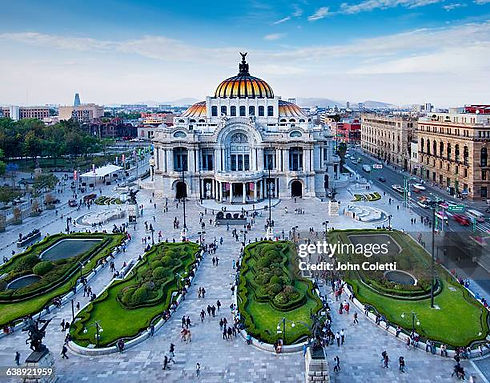
The Palacio de Bellas Artes is one of Mexico City’s most iconic cultural landmarks and a masterpiece of architecture and the arts. Located in the historic center, it combines an elegant blend of Art Nouveau and Art Deco styles, making it one of the most beautiful buildings in Latin America.
Inside, it hosts world-class performances including opera, ballet, classical music, and folkloric dance. It is also home to impressive murals by renowned Mexican artists such as Diego Rivera, David Alfaro Siqueiros, and José Clemente Orozco.
Beyond its artistic value, Bellas Artes is a symbol of Mexican cultural identity and creativity, making it a must-visit stop for anyone exploring Mexico City.

Palacio de Correos de México (Mexico City Post Office)
The Palacio de Correos de México, also known as the Mexico City Post Office, is a stunning architectural landmark located in the historic center of Mexico City.
Built in the early 20th century, it is famous for its elegant mix of architectural styles, including Art Nouveau, Gothic, and Neoclassical details. Its interior features luxurious marble staircases, intricate ironwork, and golden decorative elements that make it look more like a palace than a post office.
Today, it still functions as a working post office while also serving as a cultural and historical attraction. Visitors come to admire its beautiful design, send mail from its historic counters, and explore one of the most photographed buildings in the city.
It is considered one of the hidden architectural gems of Mexico City and a must-see stop in the historic downtown area.
Monumento a la Revolución
The Monumento a la Revolución is one of the most impressive landmarks in Mexico City and a powerful symbol of the Mexican Revolution. Located in Plaza de la República, it stands as both a memorial and a mausoleum honoring key revolutionary figures such as Francisco I. Madero, Pancho Villa, Venustiano Carranza, and Lázaro Cárdenas.
Originally designed as part of a legislative palace that was never completed, the structure was later transformed into the monumental arch we see today. Its massive dome and art-deco style make it one of the tallest triumphal arches in the world.
Visitors can also take an elevator to the top, where a panoramic viewing deck offers stunning 360° views of Mexico City. At night, the monument is beautifully illuminated, making it a striking highlight of the city skyline.


Ángel de la Independencia
The Ángel de la Independencia is one of Mexico City’s most iconic landmarks and a powerful symbol of national pride. Located on Paseo de la Reforma, this golden-winged statue was built to commemorate the centennial of Mexico’s Independence.
At its base lies a mausoleum containing the remains of key heroes of the Independence movement, including Miguel Hidalgo, José María Morelos, and Ignacio Allende. The monument is also a traditional gathering point for celebrations, protests, and major public events.
Standing tall above one of the city’s busiest avenues, the Ángel offers a striking visual centerpiece and is especially beautiful when illuminated at night. It remains one of the most photographed and recognizable symbols of Mexico City.